The art of staining clay
Staining clay is the process of integrating finely milled Mason stains directly into the clay body, allowing color to exist not as a surface treatment, but as an intrinsic part of the material itself. Each hue responds uniquely to the clay’s natural tone and to the concentration of pigment used, resulting in subtle variation and depth. Composed of mineral-based elements, these colors fully reveal themselves only through the heat and transformation of the firing process. With over fifty distinct stains in our archive, the possibilities form a broad and expressive chromatic spectrum from which each palette is composed.
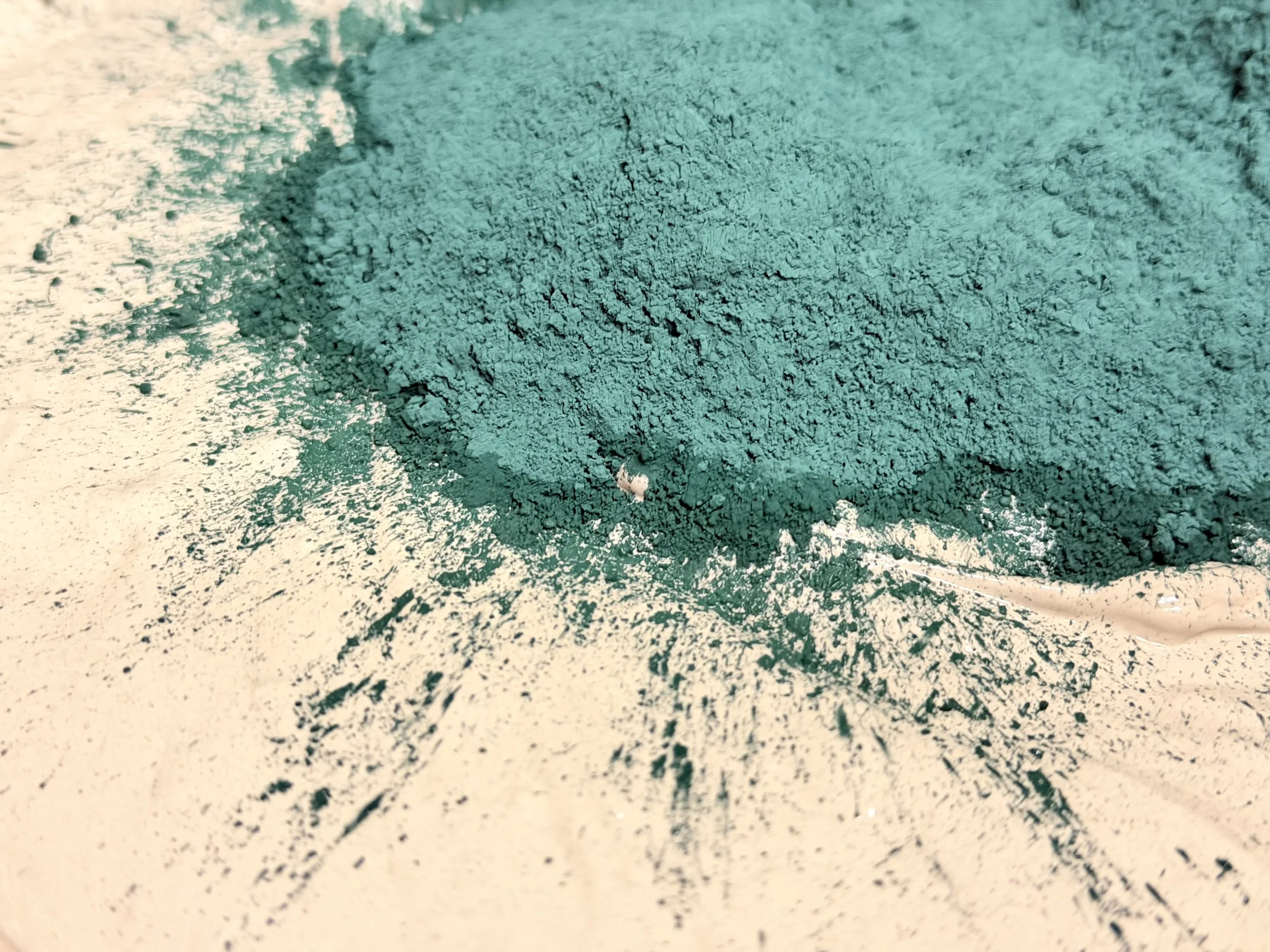
Our studio works exclusively with a wet processing method. In this approach, pigment is introduced while the clay is in a highly viscous, moisture-rich state, allowing the stain to disperse evenly and bind fully with the clay body. Precise ratios of clay and pigment are carefully measured and blended until the color achieves complete uniformity. Once mixed, the stained clay is left to rest overnight, allowing the pigment to settle and stabilize within its new form.
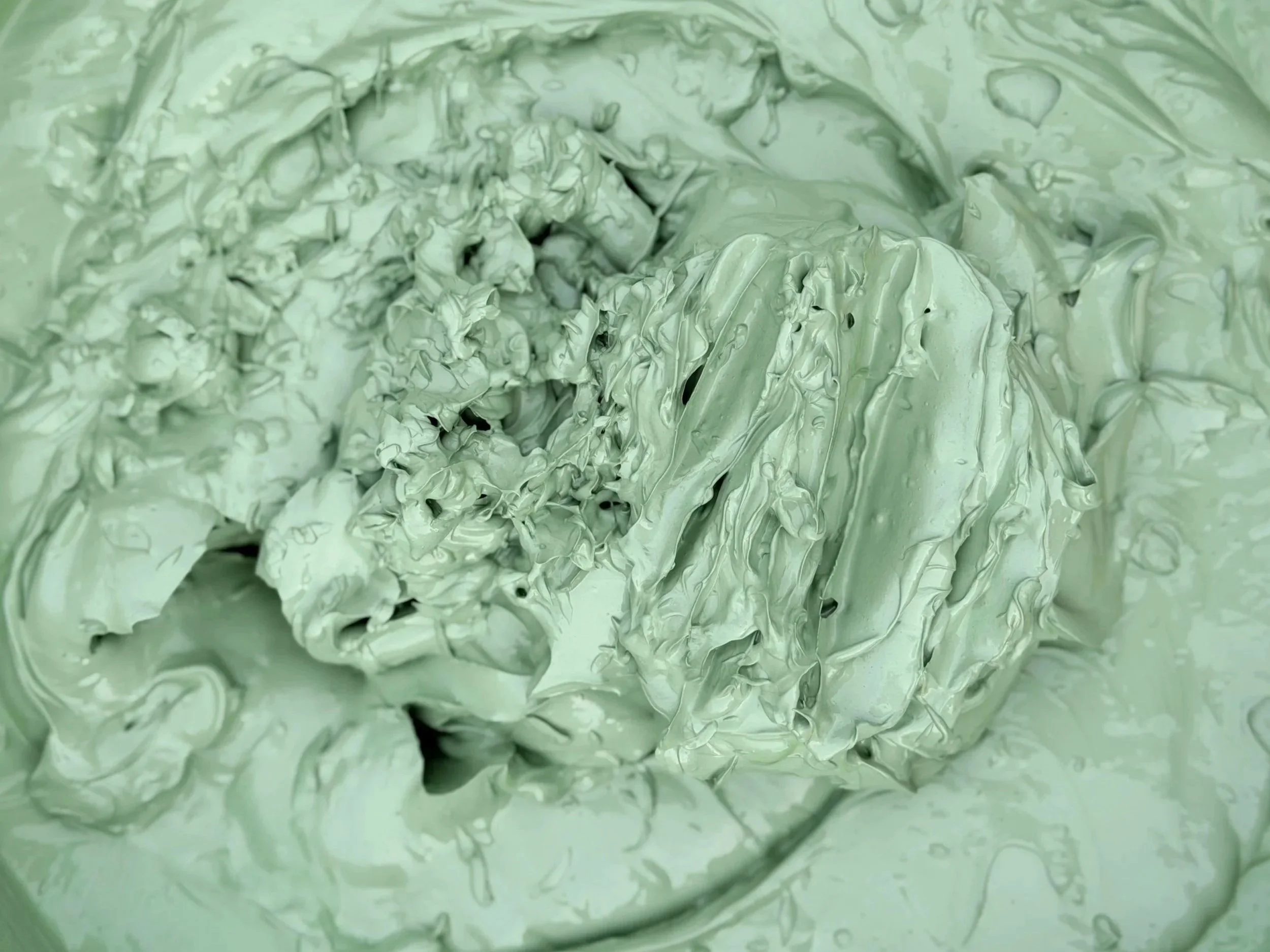
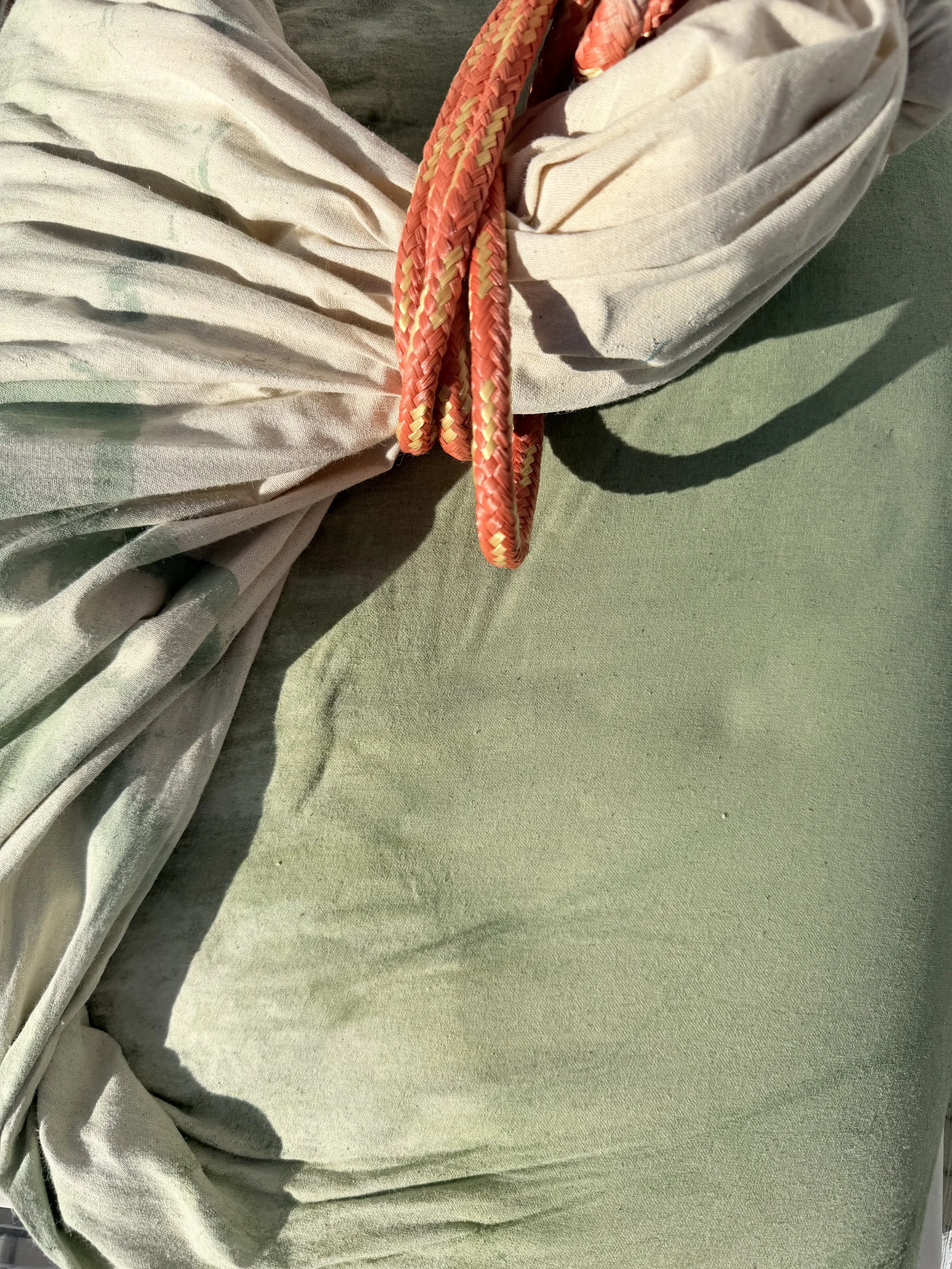
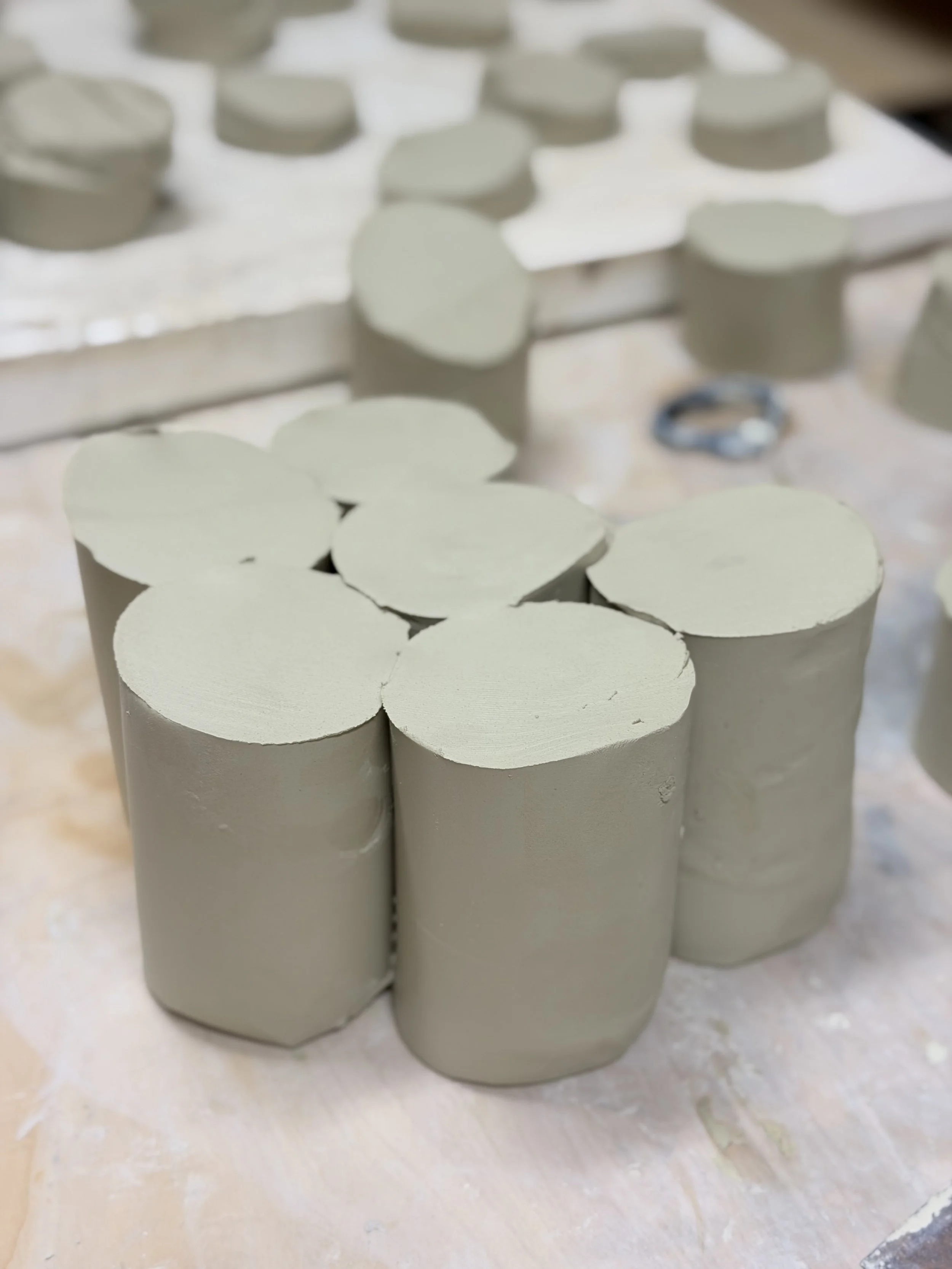
From there, the clay moves through two slow, controlled drying stages designed to gently remove excess moisture while preserving the clay’s integrity. The first stage involves draining the clay in cotton bags, followed by a resting period on plaster molds, where it gradually reaches an ideal forming consistency. Each batch is then vacuum-pugged to refine the texture, remove air, and ensure structural integrity. Finally, the clay is labeled and stored, prepared to become the foundation of the next marble, pattern, or form.
This deliberate, labor-intensive process forms the foundation of my nerikomi practice. Repeated over time, it becomes both elaborate and reliable a system built on precision, patience, and material understanding. Through it, I’ve learned to trust the process itself: to allow color, clay, and movement to resolve slowly, revealing patterns that cannot be rushed or forced. Each piece begins long before it takes form, shaped by this quiet discipline where preparation becomes the art.
Wet processing
Our studio works exclusively with a wet processing method. In this approach, pigment is introduced while the clay is in a highly viscous, moisture-rich state, allowing the stain to disperse evenly and bind fully with the clay body. Precise ratios of clay and pigment are carefully measured and blended until the color achieves complete uniformity. Once mixed, the stained clay is left to rest overnight, allowing the pigment to settle and stabilize within its new form.
Moisture conditioning
From there, the clay moves through two slow, controlled drying stages designed to gently remove excess moisture while preserving workability. The first stage involves draining the clay in cotton bags, followed by a resting period on plaster molds, where it gradually reaches an ideal forming consistency. Each batch is then vacuum-pugged to refine the texture, remove air, and ensure structural integrity. Finally, the clay is labeled and stored, prepared to become the foundation of the next marble, pattern, or form.
A new beginning
This deliberate, labor-intensive process forms the foundation of my nerikomi practice. Through it, I’ve learned to trust the process itself; to allow color, clay, and movement to resolve slowly. Each piece begins long before it takes form, shaped by this quiet discipline where preparation becomes the art.